

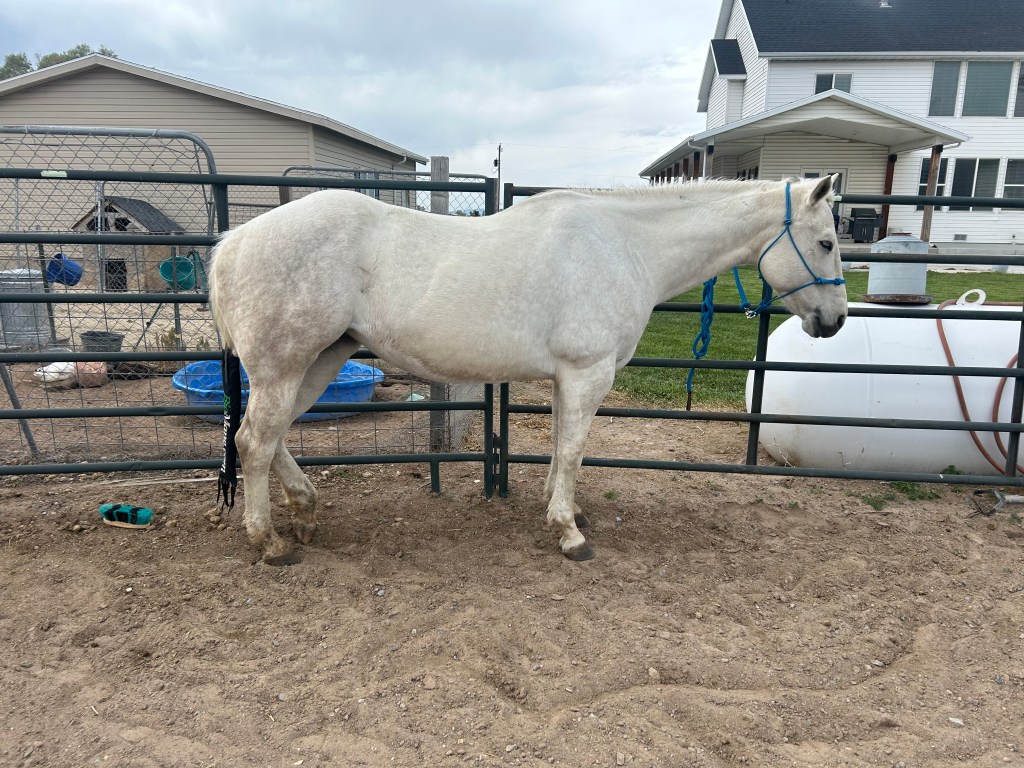
There are many different factors that can make your horse sore. One of the most common is improper saddle fit, but it doesn’t stop there. Horses can develop discomfort from compensation patterns, especially if they have old injuries that were never fully healed or rehabbed. Changes in workload can also play a major role. Going from consistent work to little or no exercise—or suddenly increasing their workload—can create muscle tension and soreness throughout the body.
Hoof balance is another major contributor. Incorrect angles or long intervals between trims can cause soreness in the legs, shoulders, back, and hindquarters. Beyond the saddle, ill-fitting cinches, breast collars, pads, and other tack can create pressure points and areas of tightness that often go unnoticed.
Horses with higher anxiety levels tend to hold tension in their bodies, which can lead to widespread soreness. Dental issues can also cause pain that radiates into the TMJ, poll, neck, and topline as the horse compensates.
Environmental factors play a role as well. Here in our rocky terrain, horses may experience strain from uneven footing or occasional slipping. As we move into the colder months, frozen ground can make horses stiff and sore, especially after turnout or riding. Even the type of arena footing you ride on—whether deep, slick, or uneven—can affect muscle fatigue and soreness.
Regular bodywork supports the horse by:
- Increasing circulation
- Relieving tight or overworked muscles
- Improving range of motion
- Helping them recover faster from rides
- Identifying tension before it becomes a bigger issue
When combined with good training practices, proper saddle fit, balanced hoof care, and a healthy routine, massage becomes a powerful tool in keeping your horse comfortable and performing at their best.
If you are not sure about your saddle fit, my Thermal Imaging service can help us evaluate the fit of your saddle and equipment.
 Balanced Stride Equine
Leave a comment